A flagship moment on this theme
"To this day, I tell people I'm still alive because of the therapy that these tools, creative tools gave to me in my life."
Personal testimony from someone who used music and the arts to survive depression following a career-ending diagnosis — a specific, striking claim that anchors the entire episode's premise without requiring the listener to accept any particular framework.
Where this is a central topic
38 episodes

Stop Doing What Worked Ten Years Ago with Dr. Elizabeth Carr
Dr. Carr speaks throughout as a 20-year practice founder and the entire strategic framework she offers is grounded in the clinician-as-operator perspective, including the pivot decisions she made in her own practice.

Virtual Worlds, Real Skills with Dr. Kryn McClain
Dr. McClain's path from clinical practice to running two companies takes up the second half of the episode, covering soft skill transfer, the isolation of leadership, and finding peer support outside the clinical world.

Building Mental Health Practices Without Burnout with Dan King
Dan and Rachel repeatedly examine the tension clinician-owners feel between clinical mission and business operation, and what it takes to navigate investor relationships from a place of clarity about what you want.

Thriving in Local Therapy Marketing with Becky DeGrossa
Becky consistently frames private practice success as requiring a business operator mindset including content strategy, market demand research, and Google Business Profile management, and Rachel explicitly connects this to her listeners asking 'now what do I do?'
Wrapping Up 2024 and What's Next for the Podcast
The entire episode is Rachel reflecting on her own journey as a podcasting clinician-founder — what she's learned from a year of builder conversations, where her thinking is now, and how she's approaching a deliberate creative transition into a rebrand.

Using Sound and Holistic Healing to Rejuvenate Your Health | Falyn Morningstar and Ian Morris of Listening to Smile
Both guests built practices without business training or family entrepreneurial support, and the episode centers on what it actually feels like to go out on your own — the fear, the failures, and what a well-matched partnership adds to the process.

Nonprofit Efforts for Teen Mental Health | Chea Weltchek of Teens with Trauma
Chea's arc from group practice owner to nonprofit founder is the spine of the episode, including her candid account of how little her clinical and practice-operations experience transferred to the nonprofit sector.
Supporting the ALICE Community | Alison Pidgeon of Move Forward Counseling
Alison's path from burned-out CMH director to 80-person group practice owner is central to the episode, and her closing advice frames clinicians as the people best positioned to redesign a broken system.

Advocating for Mental Health Insurance Reform | Lisa R. Savage of the Center for Child Development
Lisa's full arc from working for a psychiatrist-owned practice to building an 81-person organization grounds the episode in the concrete realities of the clinician-founder journey, including isolation, infrastructure-building, and learning when to push back.

IV Ketamine-Assisted Psychotherapy | Will Ratliff of Transcend Health Solutions
Will is the canonical reluctant founder: he became an entrepreneur because the care he wanted to deliver didn't exist anywhere, not because he wanted to run a business, and the episode traces his growth from solo clinician to multi-disciplinary team leader.

Integrating Yoga into Therapy | Chris McDonald of the Podcast, Yoga in the Therapy Room
Chris's full trajectory from government employee to private practice owner, self-published author, podcast host at 190-plus episodes, course creator, and podcast rebrander is treated as a live case study throughout the episode, including candid detail about what the niche pivot cost and what it was for.

Managing Election Anxiety | Jason Nicholsen of Within Reach Therapy
Jason's entire practice is organized around political and financial anxiety as distinct specialties, with his DC location as the originating context — a concrete example of how market awareness shapes niche-building for clinician-entrepreneurs.

A Blend of Psychology and Comedy | Dr. Kristen Wynns of Wynns Family Psychology
Dr. Wynns traces her path from 17-year private practice to standup comedy to a new humor coaching and workshop business, describing what it looks like to build a second offering alongside an established clinical identity.

High School Innovators Making a Difference | The Glenelg High School Robotics Club
Though the founders are students rather than clinicians, the episode models core clinician-entrepreneur behaviors: spotting an unmet need, building a minimum viable solution fast, and scaling through grants and community relationships rather than market pricing.

Healing Together as a Family | Julia Dunn of Olivia's House: A Grief and Loss Center for Children
The episode centers on Leslie Delp's founder journey and Julia's career path from personal grief to companion volunteer to clinical director, closing with direct advice about when clinicians are ready to build something from lived experience.

The Immersive Power of Virtual Reality Therapy | Dr. Kryn McClain of CatapalloVR
Dr. McClain's path from clinician to serial entrepreneur — triggered by job elimination after maternity leave — and the specific challenges of running a company while thinking like a therapist run throughout the conversation, including her closing advice about peer community.

Empowering Neurodivergent Voices | Crystal Bowen of Delta Learning Solutions
Crystal's founding story is driven entirely by unemployment and inaccessibility, not ambition — she built Delta Learning Solutions because traditional work had no place for her, making her journey a counterpoint to the typical founder narrative.
Cartoons, EMDR Therapy, and Virtual Reality | Sandra Paulsen of Paulsen Integrative Psychology
Sandra traces her entire career arc, from cartooning for corporate executives to clinical illustration in published books, around the explicit goal of integrating writing, art, and psychology into one practice identity.

Grief Counseling in a Natural Setting | Kaili Van Waveren of ThorpeWood
Kaili's arc from fashion business owner to grief counselor to nonprofit executive director is the episode's central narrative thread, including explicit advice about finding the intersection of skills and passion as the basis for building something.
Making Self-Help Resources Accessible to All | Diana Partington of the Book, DBT for Life
Diana's arc from DBT client to graduate student to DBT therapist to author to podcast host models a path from personal experience to clinical credential to multi-format content business, including a frank discussion of how she built a tiered pricing model around accessibility.
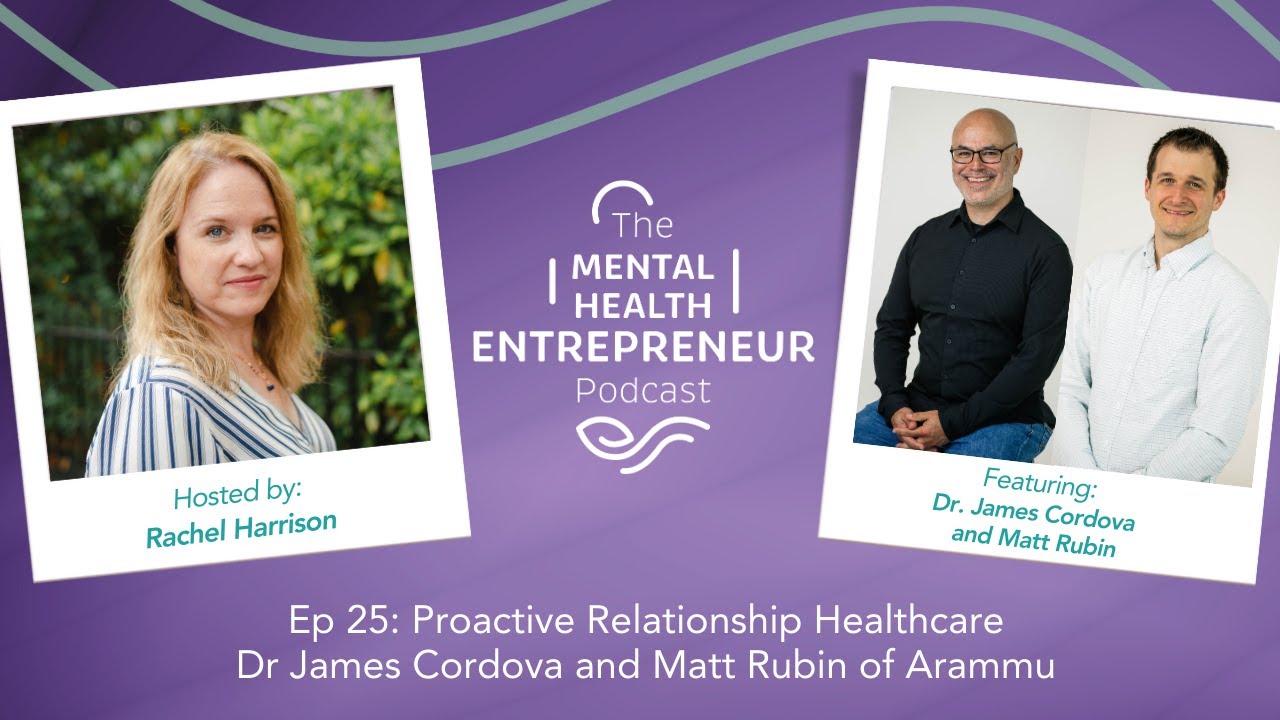
Proactive Relationship Healthcare | Dr James Cordova and Matt Rubin of Arammu
Rachel asks Matt directly about his entrepreneur lens on the mental health field, Dr. Cordova describes his reluctant path from 25-year academic to co-founder, and their eight-year partnership is the narrative spine of the episode.

Psychotherapy with Horses | Rosemary Baughman of Courageous Hearts
Rosemary's founder journey is the backbone of the episode: starting with no business knowledge, learning to write an RFP by accident, being mentored by state department officials, and taking 13 years to grow slowly and deliberately.
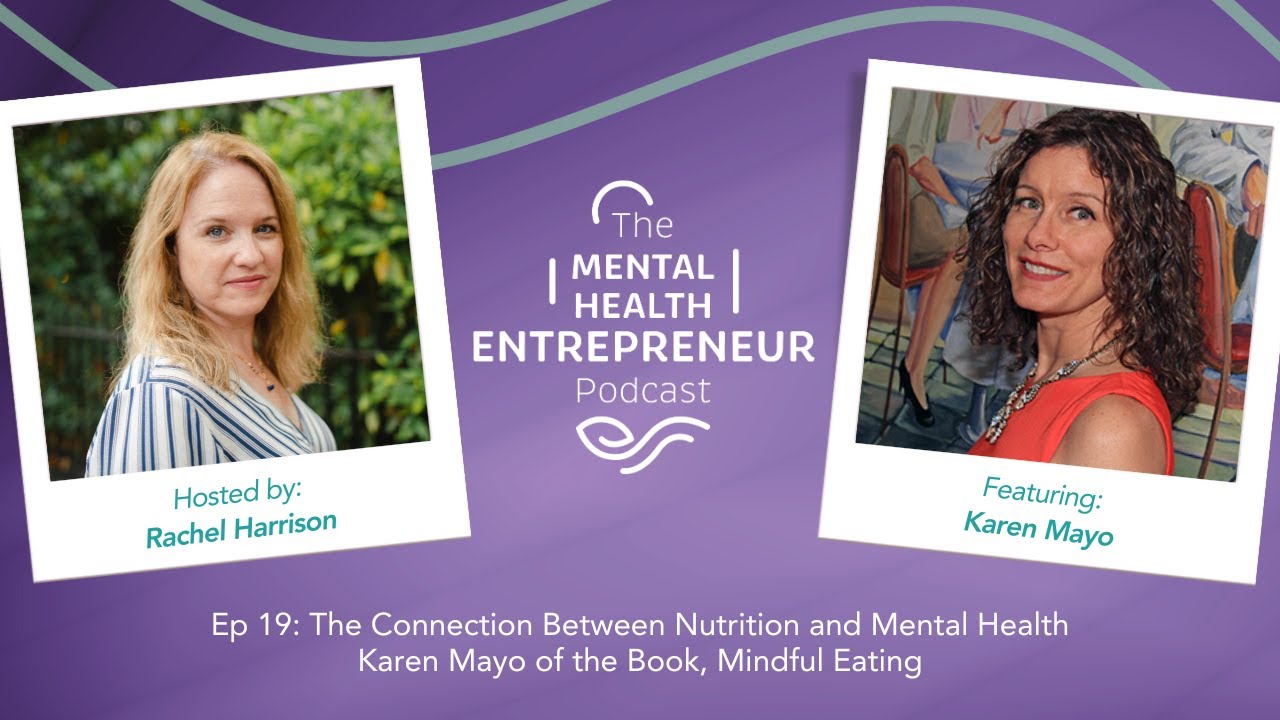
The Connection Between Nutrition and Mental Health | Karen Mayo of the Book, Mindful Eating
Karen's arc from finance to nutrition school, private practice, Amen Clinics, book authorship, and COVID-era video series models the clinician-founder path applied to an integrative modality.

The Healing Power of Drumming | Jeff Strong of the Strong Institute
Jeff's entire arc from working musician to clinical researcher to product founder over 30 years is the central subject of the conversation, including his closing advice to clinician-builders about finding their unique contribution.

Dungeons & Dragons as Therapy? How Tabletop Roleplay Games are Making a Difference | Charlene MacPherson of Nerd Adventure Therapy 20 (NAT20)
Charlene's journey from college counselor to private practice founder, driven by her own late ADHD diagnosis and a gap she couldn't find filled anywhere, anchors most of the conversation.

Revolutionizing the Way Mental Health Practice Owners Connect and Thrive | Kasey Compton of Meet You In Kentucky
Kasey's six-business arc, her reflections on rejection and abandonment responses triggered by business events, and the central question of whether entrepreneurship is born or made form the backbone of the episode.
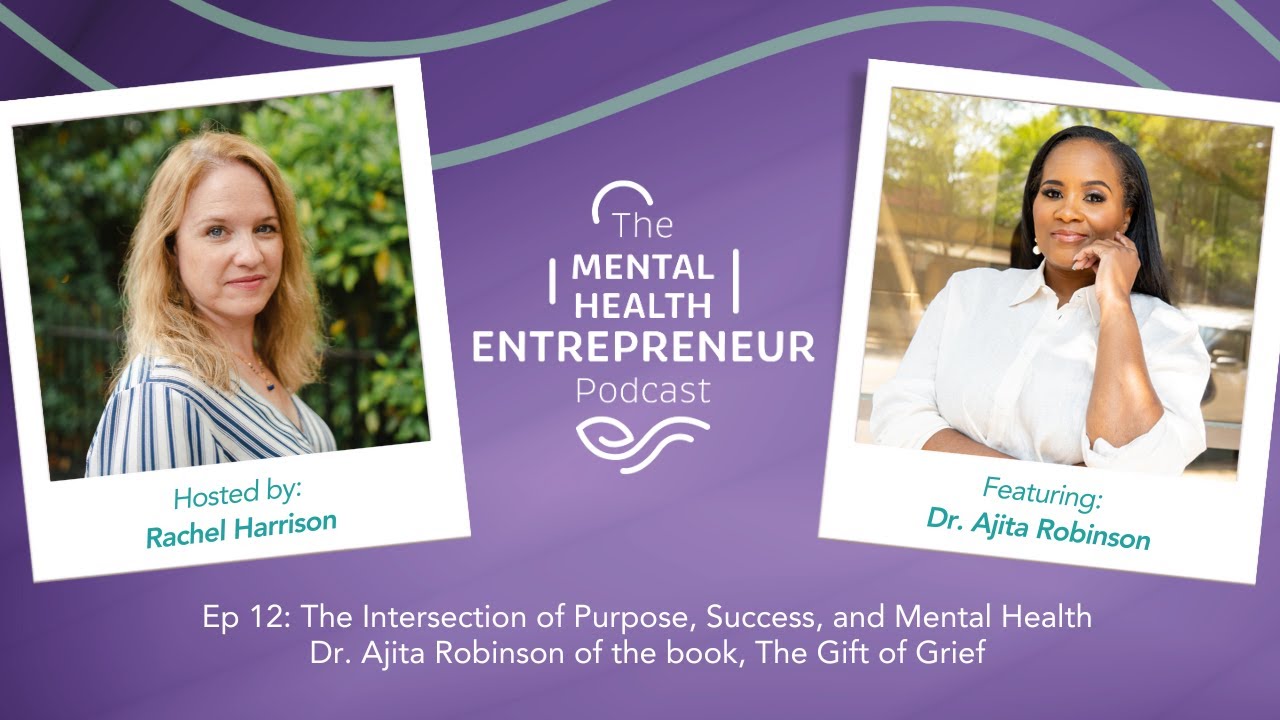
The Intersection of Purpose, Success, and Mental Health | Dr. Ajita Robinson of The Book, The Gift of Grief
Dr. Robinson's entire trajectory, from group practice to book, speaking, consulting, and coaching other clinicians, is the spine of the conversation, anchored by her brand The Purposeful and Profitable Therapist.

Connecting Black and Brown Individuals with Therapists Who Understand | Crysta Harris of the Black Brown Delaware Therapists Directory (BBDT)
Crysta traces her full arc from telling her supervisors she never wanted to be an entrepreneur to founding both a practice and a community directory driven by purpose rather than business logic.

Expanding EMDR Therapy To A Group Setting | Regina Morrow Robinson of The Book, EMDR Group Therapy
Regina's arc from unmanageable individual caseload to community builder to multi-country book editor to international trainer is a direct clinician-founder story discussed across several exchanges.

Finding Freedom with Food Through Technology | Dr. Megan Osborne of Peace With Food
The episode's spine is Megan's transition from eating-disorder clinician to app co-founder, including the identity question of whether she sees herself as an entrepreneur and what she has had to give up to build alongside her clinical practice.
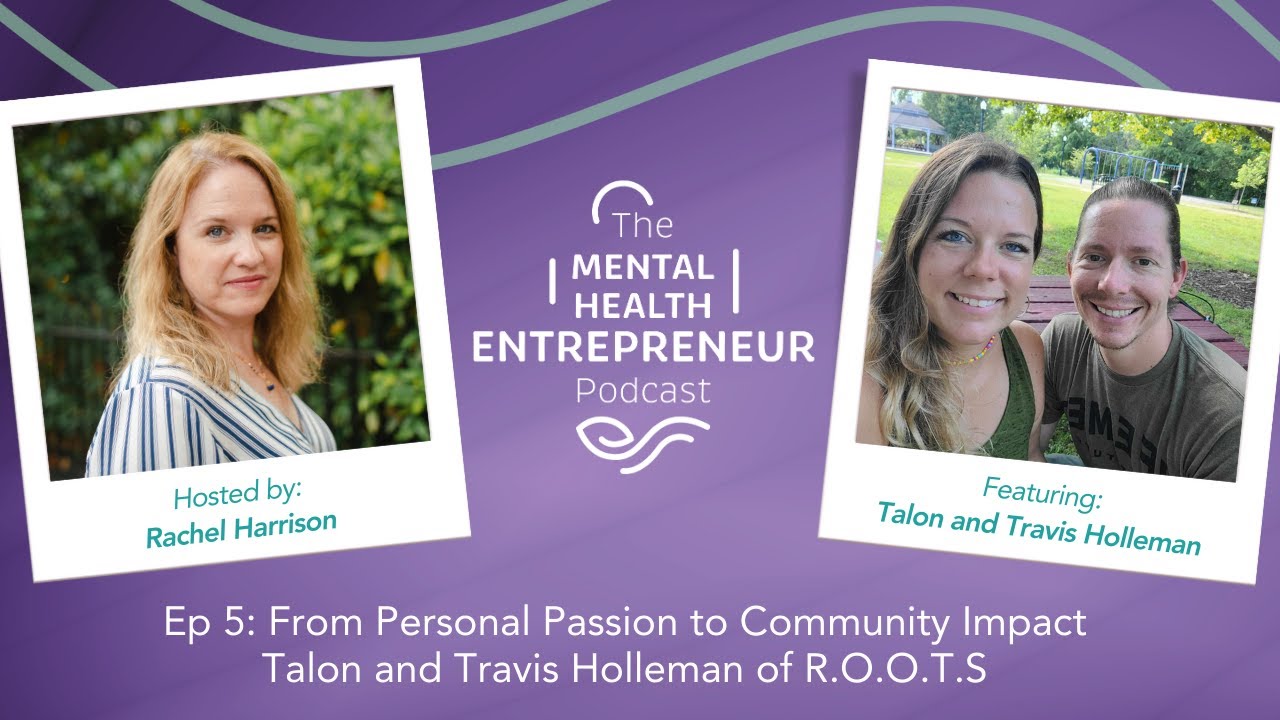
From Personal Passion to Community Impact | Talon and Travis Holleman of R.O.O.T.S
The episode centers on two founders who left conventional careers to build something mission-driven from scratch, grappling with concept validation, reluctance to launch before they felt ready, and the identity shift from practitioners to operators.

Neurodiversity and Unleashing the Brilliance Within | Erica Whitfield of Positive Development
Erica's journey from school counselor to practice founder to travel school visionary is the spine of the second half of the episode, including Rachel's direct questions about the mental battles and confidence required to build something new that nobody else is doing.
Proactively Addressing Mental Health | Rachael Bevilacqua of Sanare Today
Both Rachel Harrison and Rachael Bevilacqua share their transitions from practitioner to operator, with Rachael recounting learning balance sheets and lease agreements at Sanare Today and Rachel describing how TSTI grew from a need to train her own practice.

Innovating EMDR Therapy with Online Solutions | Yanick and Benjamin of bilateralstimulation.io
The conversation moves fluidly between the founders' journey and broader questions about what makes a successful entrepreneur, with Rachel explicitly relating their story to her own experience building TSTI and running trainings online during Covid.
Welcome To The Mental Health Entrepreneur with Rachel Harrison
The entire episode is Rachel's origin story as a clinician-turned-entrepreneur, and the podcast concept is premised on the idea that people with that dual identity are uniquely positioned to surface solutions the field has not tried yet.

Current Challenges and Innovations in the Mental Health Field | Check-In with Rachel Harrison
The entire episode is organized around what Rachel has learned about launching innovative mental health ideas within a healthcare system that wasn't built to accommodate them.

Nature as Our Co-Therapist | Gina Strauss of Center for Nature Informed Therapy
Gina's path from first cohort trainee to faculty trainer in three years illustrates how a clinician can deepen into a niche modality and build a teaching practice around it.

A Creative Approach to Grief Support | Jamie Eaton of Living Through Loss
Jamie's origin story — spotting a gap, starting a free group, building grassroots credibility, and eventually asking to be paid — is the spine of the episode.
Where this comes up substantially
18 episodes

Advocacy, Autonomy and the Future of Psychotherapy with Linda Michaels of PsiAN
Dr. Michaels closes by reframing practice business decisions as clinical ones, arguing that therapists should scrutinize billing platforms and credentialing choices with the same care they bring to treatment decisions.

Ethical Marketing Strategies for Mental Health Practices with Adrienne Wilkerson
Both Rachel and Adrienne observed that practices that formed during COVID had no marketing experience and now face a harder competitive and attribution environment as demand normalizes and the ROI tracking picture has broken down.

Rethinking Behavioral Health Access with Jason Youngblood
Both Rachel and Jason discussed the blurry boundary between coaching and therapy, with Jason sharing his own experience struggling through coach training as a licensed therapist and Rachel noting the confusion exists within the clinical community itself.

Private Equity in Mental Health Care with Dr. Jane Zhu
Dr. Zhu makes a direct call for clinicians to understand organizational finance, ownership structures, and acquisition terms, framing business literacy as an increasingly essential competency for anyone in independent or group practice.

Navigating Tech in Private Practice with Uriah Guilford
Uriah's career arc from therapist to practice owner to AI tool builder runs through the episode; the conversation also addresses how individual clinicians can differentiate their practices against corporate competition.

Strategy, Not Panic with Jeremy Zug
Independent private practice is showing a reemergence as clinicians leave MSOs after finding the hands-off value proposition doesn't deliver, and both Rachel and Jeremy made a direct case for owning your own credentialing and billing long term.
Creating Peaceful Workplaces | Dr. Sujata Ives of the Book, Activate Success
Dr. Ives models a recognizable path from clinical training to book authorship, speaking, and consulting practice, a career arc Rachel's audience is often considering for themselves.
How Qigong Helps Reduce Chronic Stress | Kathy Jankowski, Trauma-Informed Qigong Trainer
Kathy's path from frontline social justice work and strategy consulting to building a qigong training practice appears briefly and illustrates how practitioners pivot into teaching and program development.
Mental Health Support for New Moms | Adrienne Griffen of Maternal Mental Health Leadership Alliance
Adrienne's arc from personal PPD experience to volunteer to executive director is the episode's implicit model for how advocates and founders in mental health often begin, with lived experience as the origin point and a low-resource entry (a letter to the local newspaper) as the first step.

How Neurofeedback Can Improve Brain Health | Mary Ammerman of the Institute for Applied Neuroscience
Mary describes running a diagnostic-agnostic clinic, training other providers, designing group formats, and anticipating the clinician-as-coach model as consumer devices proliferate.
Using Brain SPECT Imaging for Mental Health Treatment | Dr. Rishi Sood of the Amen Clinics
Dr. Sood describes leaving a conventional residency that felt like pill-dispensing to join a clinic working outside the DSM-first paradigm, which is the clinician-pivot version of the builder story Rachel's audience is drawn to.
Nurturing Plants for Therapeutic Benefits | Aaron Vander Meer and Antoinette Vasseur of ClearView Communities
Aaron describes iterating through a failed horticulture therapy hire, recruiting Antoinette, and collaboratively designing a new model from scratch, a program-building process that parallels what clinician-founders do.

Transforming Stress Into Art | Emily Twynham and Samira Butt of Mediate and Create
The founders describe building a collective from local workshops to an online platform of 16,000 members with no advertising spend, and their origin story and scale trajectory are directly relevant to clinician-founders thinking about community-based offerings.
Benefits of Acupuncture for Addiction Treatment | Dr. Libby Stuyt of the National Acupuncture Detoxification Association (NADA)
Libby traces her arc from medical resident to dual-diagnosis program director to legislative advocate to national trainer, describing how each step grew out of clinical work and operational necessity rather than a planned business strategy.

10 Years of Trauma Specialists - a Live Episode
Rachel describes the name of the practice as a risk that could have crashed, word of mouth as its main source of growth, and pushback from other clinicians and practice owners.

The Relationship Checkup with Dr. James Cordova and Matt Rubin of Arammu
Matt's outsider-to-insider arc structures the second half of the conversation, including observations about the pace of system change and the influx of startups in the space.

What Happens When You Replace the Fax Machine with Shana Palmieri
Shana's move from clinical director to co-founder is the framing arc of the episode, though her individual founder story is covered briefly rather than deeply.
Welcome to the New Chapter of the Podcast
Rachel flags the financial and ethical pressures independent practice owners face as larger players reshape reimbursement, staffing, and consumer pricing.
Mentions
2 episodes
Mentions
2 episodes

Destigmatizing Borderline Personality Disorder | Jamie Sedgwick of the Trauma Specialists Training Institute
Jamie briefly describes how her specialty chose her through an internship opportunity, offering a small window into how a clinical niche and training practice can develop organically from early exposure.

Healing the Body, Healing the Mind | Samantha Rodriguez and Stephanie Dunker of ATI Physical Therapy
Rachel asks about ATI's origin story (a therapist doing functional capacity exams out of his garage) and frames the episode as entrepreneurship, but the guests focus on clinical and community content rather than the founder journey.
Looking to go deeper in your own work?
These TSTI trainings build on conversations from the episodes above.