A flagship moment on this theme
"Your brain does not know the difference between the situation you're in and a situation you've practiced. So you're able in the moment, without anyone knowing what's going on, to sense into what you're experiencing and activate the sensations of wholeness that's unique to you."
The practical payoff of the whole episode: a practiced state of regulation is neurologically accessible under stress. The phrase 'without anyone knowing what's going on' makes it immediately useful for clinicians in high-stakes clinical or leadership moments.
Where this is a central topic
8 episodes
How Qigong Helps Reduce Chronic Stress | Kathy Jankowski, Trauma-Informed Qigong Trainer
Frontline service providers and helping professionals are the primary use case Kathy returns to throughout the episode, and the stress-ceiling argument applies directly to clinicians doing sustained demanding work.

Destigmatizing Borderline Personality Disorder | Jamie Sedgwick of the Trauma Specialists Training Institute
Jamie returns repeatedly to the need for clinicians to examine their own reactions when working with BPD, framing self-awareness and self-care as clinical requirements rather than optional additions to the work.

A Blend of Psychology and Comedy | Dr. Kristen Wynns of Wynns Family Psychology
Dr. Wynns began standup comedy as an explicit self-care response to post-COVID stress, and the episode repeatedly returns to humor as a tool for clinicians, practice owners, and their teams to manage the weight of the work.

Nature as Our Co-Therapist | Gina Strauss of Center for Nature Informed Therapy
Gina explicitly frames nature informed work as an antidote to therapist burnout, noting that practitioners in training often say the support of nature as co-therapist makes the work feel almost like cheating.

Revolutionizing the Way Mental Health Practice Owners Connect and Thrive | Kasey Compton of Meet You In Kentucky
The entire rationale for Meet You in Kentucky is the isolation of group practice owners; Kasey and Rachel both name that the relationships formed at peer events are often the most sustaining professional connections practice builders have.
The Intersection of Purpose, Success, and Mental Health | Dr. Ajita Robinson of The Book, The Gift of Grief
Burnout prevention through income diversification, the sacrifice mindset in helping professions, structured rest practices, and sustainable revenue as self-care are central throughout the episode.
Trauma Stewardship - Navigating Overwhelm and Finding Support | Laura van Dernoot Lipsky of The Trauma Stewardship Institute
The entire episode turns on how helpers sustain themselves doing trauma work, with Laura laying out a specific four-stage sequence — physical health, personal relationships, colleague relationships, and only last, job performance — for how harm accumulates.

Current Challenges and Innovations in the Mental Health Field | Check-In with Rachel Harrison
The final third of the episode argues that COVID left a lasting trauma imprint on helpers and that unaddressed helper trauma directly limits capacity to care for clients.
Where this comes up substantially
7 episodes

Community Health, Local Solutions with Malcolm Furgol
Insurance clawbacks, claims processing complexity, and frequent denials are named by both Rachel and Malcolm as concrete deterrents that push providers away from accepting Medicaid, Medicare, and even some private insurers.

Nonprofit Efforts for Teen Mental Health | Chea Weltchek of Teens with Trauma
Chea speaks directly about managing burnout while running a group practice and a nonprofit simultaneously, and the ongoing challenge of prioritizing when both demand full attention.

How Neurofeedback Can Improve Brain Health | Mary Ammerman of the Institute for Applied Neuroscience
Rachel introduces the workplace burnout angle explicitly, and Mary extends it into the attention economy argument: the human capacity to choose where to direct focus is being systematically degraded.

Integrating Yoga into Therapy | Chris McDonald of the Podcast, Yoga in the Therapy Room
Chris connects her personal daily yoga and meditation practice directly to reduced migraines, lower reactivity, and sustained window of tolerance, and frames her self-care book as an attempt to give other therapists what she had to discover on her own.
From Personal Passion to Community Impact | Talon and Travis Holleman of R.O.O.T.S
Both founders spoke at length about founder burnout risk and their non-negotiable morning self-care routines, framing sustainability as prerequisite to community impact rather than a reward for completing the work.

A Creative Approach to Grief Support | Jamie Eaton of Living Through Loss
Jamie discusses working without pay in the early stages, recognizing when unpaid work becomes burnout risk, and asking to be compensated as a significant personal milestone.

What Happens When You Replace the Fax Machine with Shana Palmieri
Administrative burden is cited as a core problem: highly trained clinicians spending the majority of their time on phone calls and faxes rather than direct patient care.
Mentions
17 episodes
Mentions
17 episodes

When Child Care Can't Wait for Nine to Five with Sara Bradley
Healthcare workers and first responders are identified as primary users of non-traditional childcare, framing reliable childcare as a precondition for keeping those workers on the front line.

What the Research Actually Shows About AI Therapy with Dr. Nick Jacobson
Jacobson briefly addresses clinician job anxiety about AI, using the one-sided supply-demand imbalance and a one-third preference estimate to argue that AI is unlikely to reduce clinician employment.

The Reality of Parity Enforcement
Mentioned briefly in the context of the administrative burden clinicians absorb when appealing denials — hours on the phone as a concrete downstream consequence of parity failures.

Advocating for Mental Health Insurance Reform | Lisa R. Savage of the Center for Child Development
Lisa mentions the isolation of practice leadership briefly and the psychological weight of audit threats, noting that most mental health professionals are intimidated by insurance companies in ways that work against their own interests.

IV Ketamine-Assisted Psychotherapy | Will Ratliff of Transcend Health Solutions
Will briefly names therapist burnout risk as a real management concern when running a trauma-focused clinical team, contrasting what therapists need from a supervisor with the management culture nurses are accustomed to.

Managing Election Anxiety | Jason Nicholsen of Within Reach Therapy
Jason's cell phone battery metaphor is directed at clients but maps directly to clinician depletion — he is careful to include permission to disengage as a valid clinical recommendation.

Healing Together as a Family | Julia Dunn of Olivia's House: A Grief and Loss Center for Children
The episode closes with Julia's advice that clinicians must do their own healing before they can sustainably give to others, framed as the oxygen mask principle applied to nonprofit founding.

The Immersive Power of Virtual Reality Therapy | Dr. Kryn McClain of CatapalloVR
Briefly named when McClain describes the isolation clinician-founders face once they can no longer disclose business challenges to clinical colleagues, and her advice to build a business-owner peer network.

The Healing Power of Drumming | Jeff Strong of the Strong Institute
Jeff's personal experience with ADHD medication — losing the ability to improvise and create — surfaces briefly as the personal motivation that pushed him toward non-pharmacological alternatives.
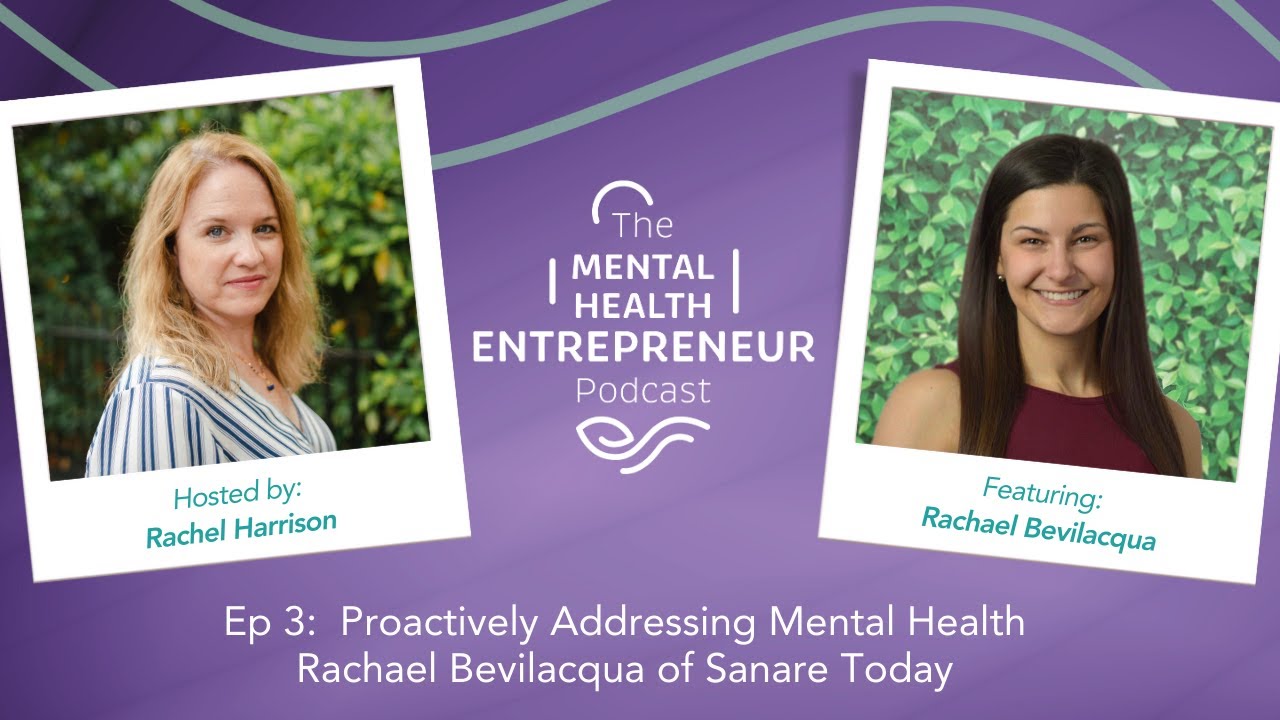
Proactively Addressing Mental Health | Rachael Bevilacqua of Sanare Today
Burnout appears briefly as one of the early signals Sanare Today wants to catch proactively, meeting people who are 'a little burnout' before that exhaustion becomes a clinical crisis requiring higher-level care.

Innovating EMDR Therapy with Online Solutions | Yanick and Benjamin of bilateralstimulation.io
A brief anecdote about a therapist driven to distraction by eight hours of auditory stimulation led to the first therapist-mute feature, a small detail showing how therapist experience was built into the product from the start.

Grief Counseling in a Natural Setting | Kaili Van Waveren of ThorpeWood
Touched in the climate grief context — the argument that distress tolerance and emotion regulation are what keep advocates functional over the long arc of difficult work.

Connecting Black and Brown Individuals with Therapists Who Understand | Crysta Harris of the Black Brown Delaware Therapists Directory (BBDT)
Burnout and boundary-setting came up near the end as practical advice for clinician-entrepreneurs, with Crysta describing her own ongoing difficulty with over-scheduling.
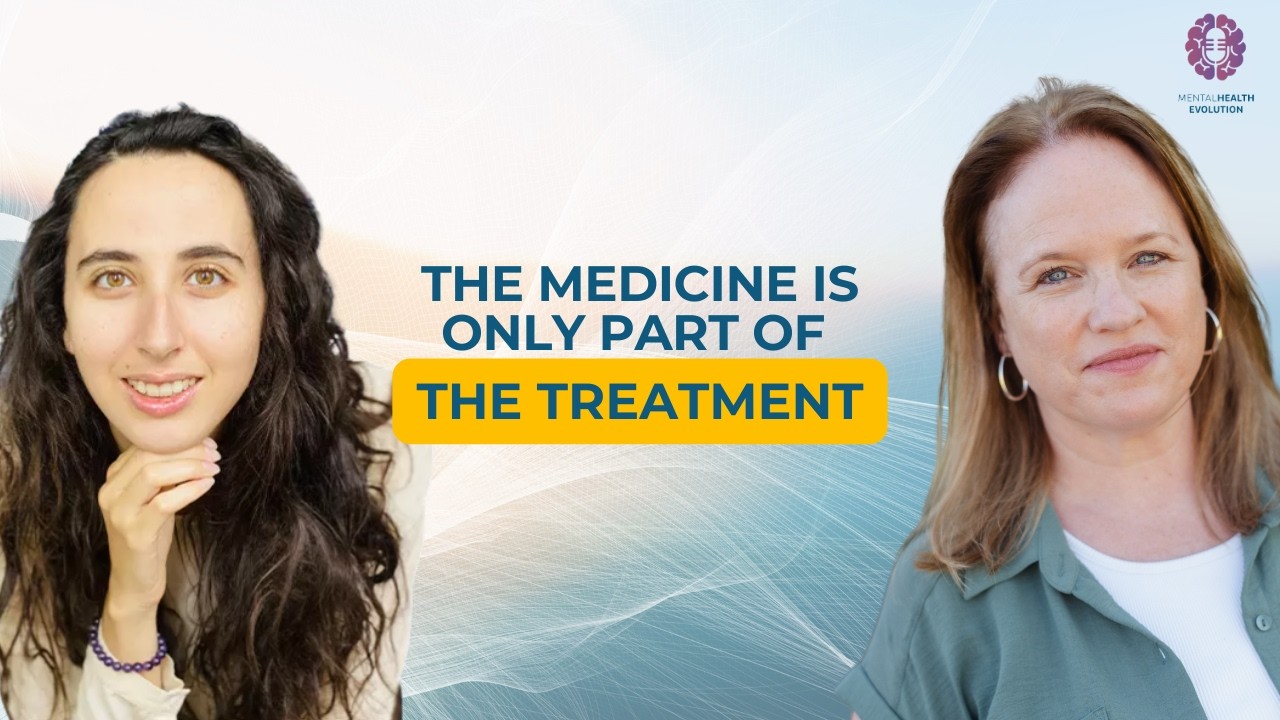
Making Psychedelic Therapy Accessible with Myriam Barthes
Therapists working alone during COVID asked for community, and Journey Clinical built in-person and online peer connection alongside help with insurance administration.

Interstate Licensure Compacts
Rachel mentions that many clinicians already hold multiple state licenses with separate CE requirements, and compacts could reduce that overhead.

Virtual Worlds, Real Skills with Dr. Kryn McClain
Briefly mentioned as a concern given the current post-pandemic and political climate in clinical work, not developed further.

Technology, Therapy, and the Future of Care
Mentioned as one of several contributing factors to the provider shortage but not developed further in the episode.
Looking to go deeper in your own work?
These TSTI trainings build on conversations from the episodes above.