A flagship moment on this theme
"What oftentimes I read is that the problem is when I read articles on this, there's not enough beds. So maybe this is true, maybe there's just never enough beds. And as we launched it out, we found out there's a lot of beds available. There is an operational problem with how we efficiently link all of the services together in real time and find where the closest, best clinically matched bed is for the patient."
This is the reframe the whole platform rests on. Clinicians who have worked in or around ERs have heard for years that the system is overwhelmed because there are no beds. Hearing that the data shows otherwise, that the problem is coordination rather than capacity, is the kind of finding that shifts how a practitioner thinks about the problem.
Where this is a central topic
27 episodes
Making Psychedelic Therapy Accessible with Myriam Barthes
Rachel frames the episode around a treatment that is legal but hard to reach, and Myriam returns to access in the founding story, the insurance discussion, and her closing prediction.
When Child Care Can't Wait for Nine to Five with Sara Bradley
The episode's spine: York Day carries a waiting list of over 600 children with 30 to 35 new names added daily, and the gap between childcare supply and demand is the structural problem Sara and Rachel return to throughout.

What Happens When You Replace the Fax Machine with Shana Palmieri
Shana's central insight reframes the access problem: the barrier is not bed scarcity but the absence of a system that can efficiently match available beds to patients in real time.

Everybody's Talking About Mental Health But Nobody's Funding It with Stephanie Slowly Little
The rural-to-urban access divide in Maryland is the structural frame for nearly the entire conversation, with Stephanie and Rachel mapping how geography, transportation, insurance type, broadband access, and workforce shortages stack on top of each other rather than cancel out.

What the Research Actually Shows About AI Therapy with Dr. Nick Jacobson
The provider-to-patient ratio (35 providers per 100k people against 33k annual disorder cases) is Jacobson's foundational argument for why AI therapy must operate outside the traditional care system, not merely supplement it.
The Crisis Text Line with Dr. Shairi Turner
Two-thirds of rural texters reported having no one else to turn to, and Dr. Turner names geographic isolation, provider shortage, and lack of insurance as the three forces driving that gap.

The Reality of Parity Enforcement
Rachel draws a direct line from parity violations to patients dropping out of treatment, providers leaving insurer networks, and care becoming harder to reach for everyone in that network.

Mental Health Access, Telehealth Policy and the Future of Behavioral Health Care with Andrea Fox
A recent study found Medicare patient access in rural areas has not improved as hoped despite expanded telehealth flexibilities, even as the $50 billion Rural Health Transformation Program begins distributing state-level funding.

Rethinking Behavioral Health Access with Jason Youngblood
The 55% statistic and the human and economic consequences of untreated behavioral health conditions formed the backbone of Jason's entire framing and returned repeatedly throughout the conversation.

Interstate Licensure Compacts
A driving argument for compacts — rural communities face serious provider shortages, and compacts could allow urban specialists to reach underserved areas and connect specialty clients with providers they currently cannot access.

Technology, Therapy, and the Future of Care
Rachel opens with this as the framing problem, spending the first third of the episode documenting its causes: burnout, insurance barriers, geographic unevenness, and reimbursement structures that push providers toward private pay.
Inside Behavioral Health Systems with Cathy Gilbert
The episode returns to this repeatedly as the thread connecting every other issue: insurance clinics, stalled value-based care, and rural access gaps all trace back to there being fewer clinicians than the system needs.

Private Equity in Mental Health Care with Dr. Jane Zhu
Rachel and Dr. Zhu return repeatedly to how PE consolidation, clinician opt-outs from insurance panels, and provider maldistribution collectively shrink access for insured patients who cannot find available in-network providers.
Understanding Mental Health Parity with Deborah Steinberg
Ghost networks, inaccurate provider directories, network adequacy standards, and the patient experience of calling 20 numbers and finding no one in-network are treated as direct consequences of parity non-compliance.
Viewing Mental Health Care Through a Family Systems Lens
Cited with specific data throughout: 17% of patients unable to find in-network behavioral health providers versus 3-4% for other specialties, geographic disparities, wait times, and telehealth as a partial but limited remedy.
Policy Shifts Reshaping Mental Health Care with Cathy Gilbert
Loss of coverage for vulnerable populations, provider network adequacy concerns, and the downstream societal effects of untreated mental illness are woven through the full episode.

Nonprofit Efforts for Teen Mental Health | Chea Weltchek of Teens with Trauma
The entire nonprofit mission is built around the gap between teens who need intensive trauma therapy and cannot access it through insurance limits, high copays, or no coverage at all.
Mental Health Support for New Moms | Adrienne Griffen of Maternal Mental Health Leadership Alliance
The navigation problem runs through the whole episode — how even well-resourced, insured, English-speaking new moms cannot find help, and what structural fixes (universal screening, digital tools, federal hotlines) would actually change that.
Supporting the ALICE Community | Alison Pidgeon of Move Forward Counseling
The ALICE population — employed people with high-deductible insurance who cannot afford copays — is the spine of the episode, from Alison's early intake experiences to her statewide United Way initiative.

The Human Side of Elite Athletes | Julie Kliegman of the book, Mind Game
Multiple access threads: athletes avoiding team-funded clinicians due to trust concerns, pay inequity limiting private providers, youth sports resource gaps, and Rachel's observation that the general therapist shortage compounds all of it.
Making Self-Help Resources Accessible to All | Diana Partington of the Book, DBT for Life
The cost of DBT therapy is named explicitly as a barrier -- groups at $70/session, individual therapy more -- and Diana's book, webinars, and podcast are framed as ways to get evidence-based skills to people who cannot access or afford full DBT programs.

Supporting Grieving Kids Through Play and Connection | Brie Overton of Experience Camps
Experience Camps is entirely free to families, offers travel scholarships, and explicitly names cost barriers as something the organization is designed to eliminate for the estimated 6 million grieving children in the US.

Benefits of Acupuncture for Addiction Treatment | Dr. Libby Stuyt of the National Acupuncture Detoxification Association (NADA)
Recurring emphasis on the protocol's very low supply cost, potential to train peer coaches and lower-credential staff, and active deployment in needle exchanges, jails, and prisons to reach people who cannot access traditional treatment.

The Power Of Partnerships In Creating A Safer Community | Katie Cashman of Change the Conversation
The counseling grants program -- covering co-pays, deductibles, and private pay fees with a single qualifier (CSA survivor) -- is the episode's most extended and specific example of how organizations can strip out financial barriers to trauma treatment.
Welcome To The Mental Health Entrepreneur with Rachel Harrison
Rachel anchors the podcast's purpose in a concrete operational reality: six group practices with highly trained EMDR therapists, and still a waitlist, framing the crisis as a structural capacity problem rather than a staffing one.

The Relationship Checkup with Dr. James Cordova and Matt Rubin of Arammu
Matt returns repeatedly to the argument that the workforce exists today but the model is wrong, and that brief interventions could solve access without requiring more clinicians.

Expanding EMDR Therapy To A Group Setting | Regina Morrow Robinson of The Book, EMDR Group Therapy
The waitlist problem and clinician shortage are the stated motivation for the whole book; Rachel confirms it from her own group practice experience mid-conversation.
Where this comes up substantially
31 episodes

Follow the Money, Follow the Power with Joanne Frederick
Rachel names administrative burden as the reason many providers who want to serve Medicaid, Medicare, and military patients do not, and frames credentialing delays as a patient access problem as well as a revenue one.
Pessimism Is Not a Strategy with Marcus Schmit
Small providers in rural greater Minnesota face closure under the compliance burden, and NAMI Minnesota is moving its classes to asynchronous, multilingual formats so families can reach support on their own schedule.

Trusted Tools for Peer Workers with Naveen Raman
The conversation returns repeatedly to how curated AI tools can help people navigate complex systems they would otherwise struggle to access, including a discussion of 211 hotlines and Department of Social Services as potential deployment targets.

Out‑of‑Pocket and Out of Reach
Rachel shares anecdotal reports from group practice owners and solo providers who are struggling to fill caseloads after years of high demand, suggesting clients are not entering or are dropping out of care.
Building a Mental Health System That Works with Sue Abderholden
Sue describes a pilot program in Minnesota that sends peer specialists to engage people before full crisis, aimed at going upstream before commitment or police involvement becomes necessary.

Big Mental Health Stories & Trends to Watch in 2026
Rachel distinguishes between geographic access gaps and a newer pattern of small practices losing clients to large digital-first companies, framing these as two distinct access problems happening simultaneously.

AI and Measurement-Based Care with Dr. Dylan Ross
Supply-demand mismatch in behavioral health is cited as context for why efficiency gains from AI and MBC matter at a population level, with 20 percent year-over-year utilization increases named as the payer pressure point.

When AI Meets Therapy: Risks, Ethics, and Advocacy with Dr. Ajita Robinson
The episode connects AI therapy usage patterns (mostly after hours, by vulnerable people who cannot access or afford human clinicians) to structural barriers in the insurance system rather than consumer preference.
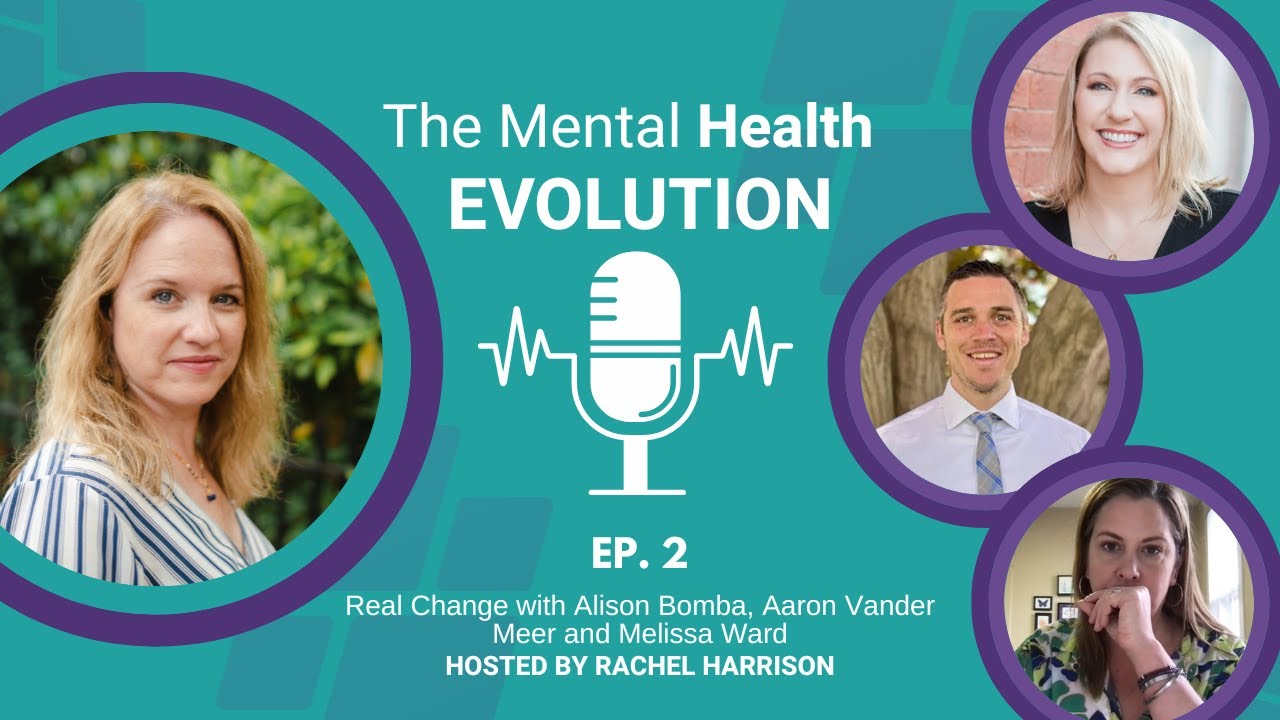
Real Change
Telehealth during the pandemic and interstate licensure compacts were cited as genuine examples of tech improving access, complicating the episode's overall skepticism and preventing the argument from landing as simply anti-tech.
Welcome to the New Chapter of the Podcast
Rachel frames consumer choice as a central concern, arguing that people seeking care deserve to understand the differences in rules, training requirements, and ethics between tech platforms and local providers.

Advocating for Mental Health Insurance Reform | Lisa R. Savage of the Center for Child Development
Lisa raises the provider shortage in Delaware and argues that venture-capital consolidation in mental health specifically threatens care access in smaller states where independent practices serve populations larger platforms will not prioritize.

High School Innovators Making a Difference | The Glenelg High School Robotics Club
The team explicitly identifies cost and poor wheelchair fit of existing adaptive equipment as the primary barrier to participation, and their free, universally-designed products are a direct response to that access gap.

The Immersive Power of Virtual Reality Therapy | Dr. Kryn McClain of CatapalloVR
McClain frames CatapalloVR as a way to move clients through waitlists faster and reach transition-age youth who are falling through gaps in occupational readiness, daily living skills, and emotion regulation.

Current Challenges and Innovations in the Mental Health Field | Check-In with Rachel Harrison
Rachel notes that self-pay models give providers more control but can't reach clients who can't afford out-of-pocket rates, framing it as a tension every clinician-entrepreneur has to reckon with.
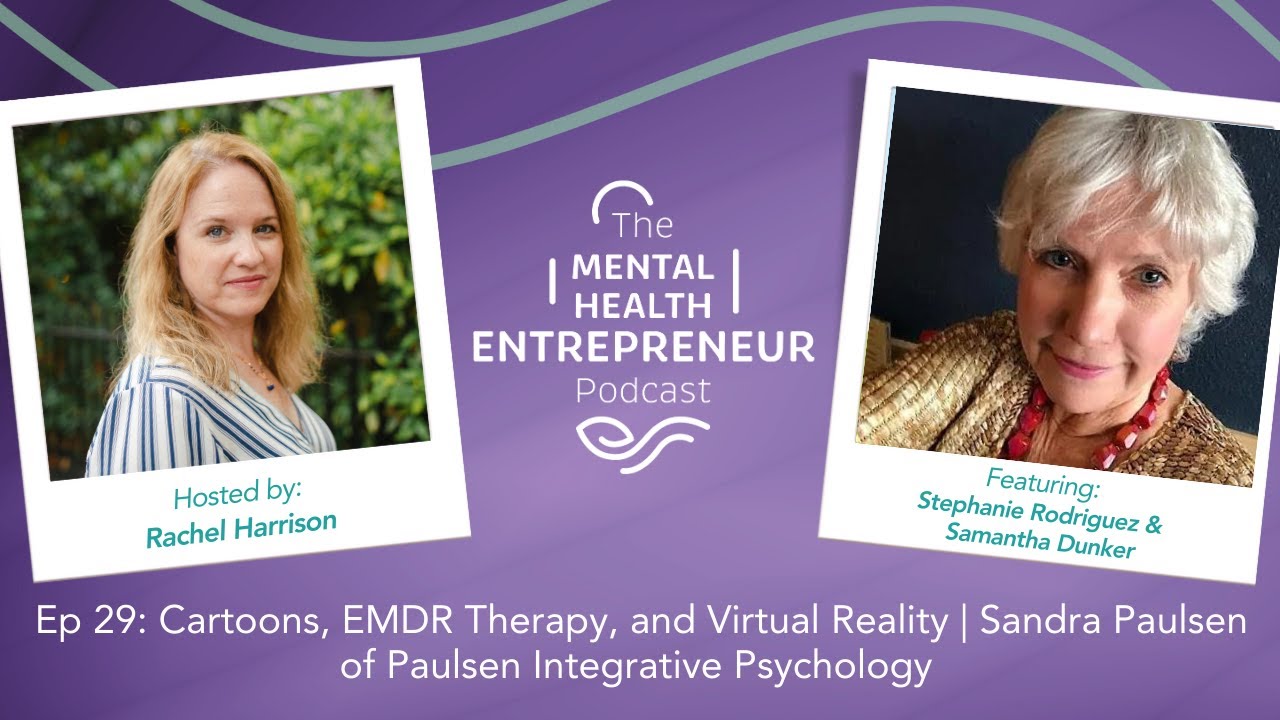
Cartoons, EMDR Therapy, and Virtual Reality | Sandra Paulsen of Paulsen Integrative Psychology
Both speakers discuss the gap between EMDR's effectiveness and clinician supply, framing telehealth delivery to incarcerated populations and VR-assisted treatment as partial solutions.

Healing the Body, Healing the Mind | Samantha Rodriguez and Stephanie Dunker of ATI Physical Therapy
The guests explain that Maryland is a direct-access PT state, meaning patients can self-refer without a physician's script — a structural access point that opens a practical referral pathway for mental health clinicians.

Proactive Relationship Healthcare | Dr James Cordova and Matt Rubin of Arammu
Matt makes the specific argument that if providers spent 10% of their time on checkups the existing workforce could cover the entire country, reframing access as a model problem rather than a supply shortage.

Transforming Stress Into Art | Emily Twynham and Samira Butt of Mediate and Create
Samira and Emily articulate a vision of bringing neurographic art to schools, workplaces, and dementia care settings, framing broad accessibility as the central goal of their scaling ambition.

Dungeons & Dragons as Therapy? How Tabletop Roleplay Games are Making a Difference | Charlene MacPherson of Nerd Adventure Therapy 20 (NAT20)
Rachel raises the accessibility angle explicitly, gaming as a lower-threshold entry for people who've avoided or had bad experiences with talk therapy, and Charlene confirms it as a core feature of her model.

Connecting Black and Brown Individuals with Therapists Who Understand | Crysta Harris of the Black Brown Delaware Therapists Directory (BBDT)
The directory directly addresses the access problem of Black and Brown clients being unable to find culturally matched therapists, and the 3% Black therapist representation statistic grounds the structural argument.

A Creative Approach to Grief Support | Jamie Eaton of Living Through Loss
Insurance barriers, the shortage of available EMDR providers, and the deliberate choice to keep LTL services free all surface as access obstacles the organization actively works around.

Finding Freedom with Food Through Technology | Dr. Megan Osborne of Peace With Food
Megan explicitly frames the app as a more affordable alternative to her $100-plus-per-hour clinical services and a practical resource for people on her waiting list who can't yet get an appointment.
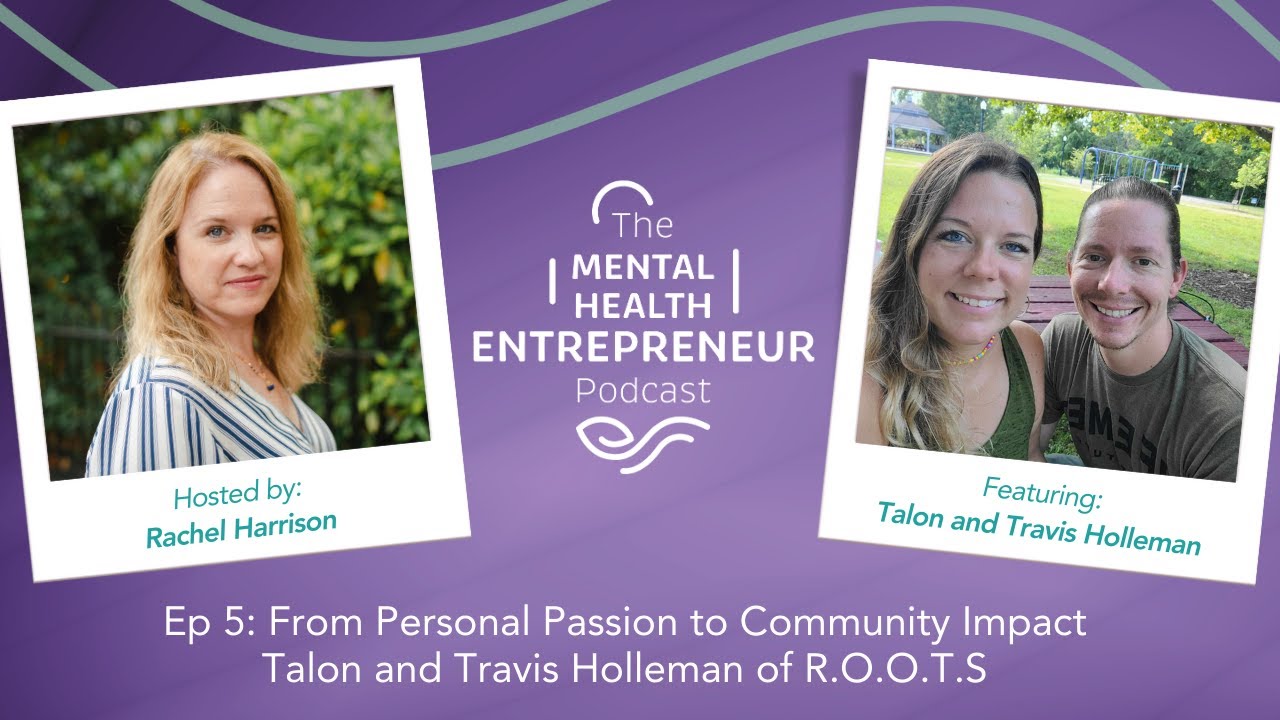
From Personal Passion to Community Impact | Talon and Travis Holleman of R.O.O.T.S
The founders spoke about seeking grant funding to offer programming for free and about partnering with organizations serving neurodiverse populations, explicitly framing the homestead as a community access resource.

Innovating EMDR Therapy with Online Solutions | Yanick and Benjamin of bilateralstimulation.io
The firefighter story and the Covid-era telehealth surge both illustrate how online bilateral stimulation tools opened treatment access for clients who could not receive in-person EMDR care.

The Intersection of Purpose, Success, and Mental Health | Dr. Ajita Robinson of The Book, The Gift of Grief
The gap between clinical need and available providers is framed as the reason clinicians should extend reach through speaking, writing, and psychoeducation beyond direct practice.
Be the One Who Does It
Rachel cites Inseparable's workforce report on how few states meet their population's demand for mental health services and ties that gap to new companies entering the field.

Navigating Tech in Private Practice with Uriah Guilford
Uriah argues that AI and VC-backed platforms, despite their downsides, are meaningfully broadening who gets access to therapy through marketing reach and 24/7 availability.

The Coverage Gap Is a Policy Problem with Cara Cheevers
Ghost networks, timely-access standards, and the patient's right to be seen within seven to ten days frame access as a measurable, enforceable standard.

Tiered Care, Technology, and the Future of Mental Health
The tiered model is framed as a structural response to access barriers and provider shortages, with ER triage offered as a concrete working analogy.

Policy Shifts in School Mental Health with Matthew Stone
Students risk losing mental health support when grants are terminated mid-year and districts cannot sustain positions they had just hired for.
Building Collective Power with Nicole Sartini
Nicole ties low reimbursement to network adequacy: coverage exists only on paper when clinicians can't afford to stay in network.
Mentions
10 episodes
Mentions
10 episodes

Stop Doing What Worked Ten Years Ago with Dr. Elizabeth Carr
The affordability gap between mental health need and what people can actually pay is raised as a key reason the COVID-era referral surge has subsided even though underlying demand remains high.

Advocacy, Autonomy and the Future of Psychotherapy with Linda Michaels of PsiAN
PsiAN's nationwide market research with 3,000+ members of the public found widespread confusion about how to find a therapist, what evidence-based therapy means, and how to navigate payment, and PsiAN is building a nationwide directory to address this.

IV Ketamine-Assisted Psychotherapy | Will Ratliff of Transcend Health Solutions
Treatment-resistant patients appear throughout as an underserved population who have exhausted conventional options, with KAP framed as closing a gap for people the standard system has not been able to help.

Empowering Neurodivergent Voices | Crystal Bowen of Delta Learning Solutions
Crystal notes that grant structures and traditional project management frameworks systematically exclude neurodivergent-led organizations because they were built on neurotypical assumptions about how work gets done.
Trauma Stewardship - Navigating Overwhelm and Finding Support | Laura van Dernoot Lipsky of The Trauma Stewardship Institute
Laura and Rachel briefly address the suffering of people who cannot get mental health support due to waitlists, availability, and affordability, framed as part of the broader pain coursing through the system.

What Clinicians Need to Know About AI Law with Dr. Nick Shumate
Mentioned briefly in the context of AI potentially reaching underserved populations and filling gaps where clinical capacity is limited, but not developed as a sustained argument.
Why Value-Based Care Can Feel So Hard with Josephine Wilton, Pt. 2
Mentioned briefly in the context of how geography shapes care access for patients with schizophrenia, with the observation that urban location does not guarantee access.

When Payers Own the Data: What the CAQH Rebrand Means for Providers
Credentialing delays and directory inaccuracies are raised as downstream risks of the new ownership structure, though no confirmed harm has emerged.
The Connection Between Nutrition and Mental Health | Karen Mayo of the Book, Mindful Eating
Rachel opens by noting her group practice can't meet demand; this motivates the conversation but isn't developed beyond the framing.

Using Brain SPECT Imaging for Mental Health Treatment | Dr. Rishi Sood of the Amen Clinics
Dr. Sood names universal access as his vision for the field but does not develop it beyond a brief statement.
Looking to go deeper in your own work?
These TSTI trainings build on conversations from the episodes above.