Foundation of Trauma Therapy
Eight weekly sessions on the stabilization phase of trauma treatment. The preparation work that comes before reprocessing, whatever modality you use.
This Cohort
October 20 - December 8, 2026
Tuesdays, 8:00-9:30 AM ET · Live on Zoom
$409 $479 per person
Early bird until October 6, 2026

This Cohort
October 20 - December 8, 2026
Tuesdays, 8:00-9:30 AM ET · Live on Zoom
Where this training sits
A Training in the First Phase of Trauma Work
Trauma treatment moves through three stages, and each one depends on the one before it.
Stabilization
Safety, regulation, and the capacity to stay present. The groundwork that makes everything after it possible.
Reprocessing
Where EMDR and the other reprocessing modalities do their work, once a client is stable enough to hold it.
Reintegration
Life on the other side of the trauma work, organized around one question: who am I without the trauma?
Stabilization means a client can hold a baseline of functioning, tolerate both positive and negative feeling, and reach for coping skills that actually work. Janina Fisher's observation, which this course returns to, is that trauma survivors cannot teach themselves what safe and stable mean. They learn it from a clinician who can offer structure, information, and feedback. This training is about becoming that clinician.
It is open to any clinical role, from interns and provisionally licensed clinicians through fully licensed therapists and psychologists. No EMDR training is required, and nothing here assumes one modality. Whatever you use, or plan to use, for reprocessing, the preparation work is the same.
Week by week
The Eight Modules
One module per week, each led by the facilitator who knows that territory best. Every module carries its own considerations for working with children and neurodivergent clients.
Melissa opens the course with the research base: the ACE study, what prolonged stress does to a developing brain, and the structures trauma reshapes. The second half turns toward repair, how co-regulation, relational therapy, and attachment work help a nervous system move from fight-or-flight toward trust and safety.
Session objectives
- •Participants will learn about childhood adverse experiences and its impact on brain development.
- •Participants will be able to identify main parts of the brain that are impacted by trauma.
- •Participants will learn how trauma impacts brain development on a cellular level.
- •Participants will be able to define co-regulation, and understand how it can rewire the brain from flight/flight to trust and safety.
- •Participant will learn how relational therapy and attachment work help to rewire brain
- •Will address considerations of working with kids and neurodivergent individuals
Children and neurodivergent clients, in every module
Each of the eight sessions carries its own considerations for working with children and with neurodivergent clients. Adaptations run through the whole course as a thread, so the skills arrive ready for the caseload you actually have.
Built for practice
Sessions run live and interactive, with activities, demonstrations, and small-group discussion. Each module comes with handouts you keep, and each is recorded for reference between sessions.
Visit our TSTI Policies page for information regarding our Substitute Trainer Policy.
What you take back to your caseload
What Changes in Your Sessions
Eight weeks is enough time for the way you work to shift in specific, watchable ways.
How You Open a First Session
You gather a history in headlines rather than details, so a client can tell you what happened without reliving it. The biopsychosocial interview becomes something you do with a client instead of to them.
What You Do When a Client Leaves the Window
You recognize hyperarousal and hypoarousal as they happen, and you have state-shifting moves for both, including the quiet kind a dysregulated client never has to notice.
How You Explain the Work
You can walk a client through what trauma does to a brain and what your modality does about it, in plain language, at whatever depth they want. Informed clients advocate for themselves.
How You Pace
You read a client's affect tolerance and let it set the speed, dipping toes rather than flooding, and you know the difference between containment and compartmentalization when you see it.
How the Work Sits with You
Your own window of tolerance is in the room too. The course spends real time on the clinician's side of the work: knowing your triggers, noticing how you show up to session, and protecting yourself from secondary trauma.
The formal course objectives
- 1.Explain how trauma impacts the brain.
- 2.List the 3 stages of trauma treatment.
- 3.Identify at least 2 trauma informed intake interventions.
- 4.Describe at least 3 therapeutic interventions to assist in preparing clients for trauma reprocessing.
Four clinicians, one course
Meet Your Facilitators
Each module is taught by the facilitator closest to its territory. All four are practicing clinicians.

Katie Honeywell, LPCMH, NCC
Facilitator · Body Awareness

Whitney Dahlberg, LCPAT
Facilitator · Mindfulness & Grounding

Cheyenne Bowman, LCPC
Facilitator · Stabilization, Initial Sessions, Affect Tolerance & Attunement

Melissa Rivera-Smith, LPCMH, NCC
Facilitator · Trauma & The Brain
From past cohorts
What Past Participants Said
I recently had the opportunity to participate in the Foundations of Trauma Therapy training and it was truly transformative—both professionally and personally. The facilitators created a safe, engaging, and insightful learning environment that deepened my understanding of trauma and its impact on my clients. The training provided practical tools and strategies to approach care with empathy, sensitivity, and resilience-building in mind. I recommend this training to anyone interested in learning the fundamental tools required to support your clients needs in session. This training would be particularly helpful for new therapists and therapists interested in exploring more complex trauma trainings in the future.
Alan Weber, LSW
Mindful Soul Center for Wellbeing
I recently completed the course, "Foundations of Trauma Therapy Training: Master Stabilization in 8 weeks", and found it to be a helpful refresher on key trauma-informed principles. The content was well-organized, and many of the instructors provided clear, creative examples that helped reinforce the concepts. I’d recommend it for anyone starting out in trauma work or looking to build a foundational understanding of trauma-informed care.
Carlee Bellapigna, MA, LAC, NCC
Therapist (She/Her/Hers), Mindful Soul Center for Wellbeing
This trauma training exceeded my expectations. The content was not only extensive but presented in a way that made complex concepts truly accessible. I appreciated the use of relatable metaphors and real-world examples that I could immediately apply with my clients and integrate into the clinical growth of my team. The entire team and all presenters were knowledgeable, personable, and fully engaged throughout the process—making the learning experience both meaningful and supportive. This training didn’t just add knowledge; it equipped me with tools to strengthen outcomes for both my clients and the therapists I supervise.
Heather R. Gaudette, LICSW
Co-Founder, Wellness Within
The people behind the work
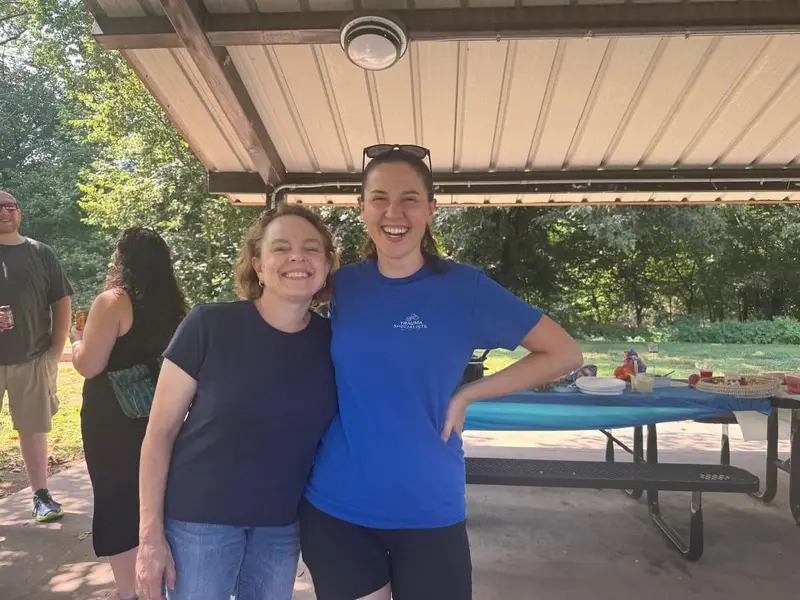
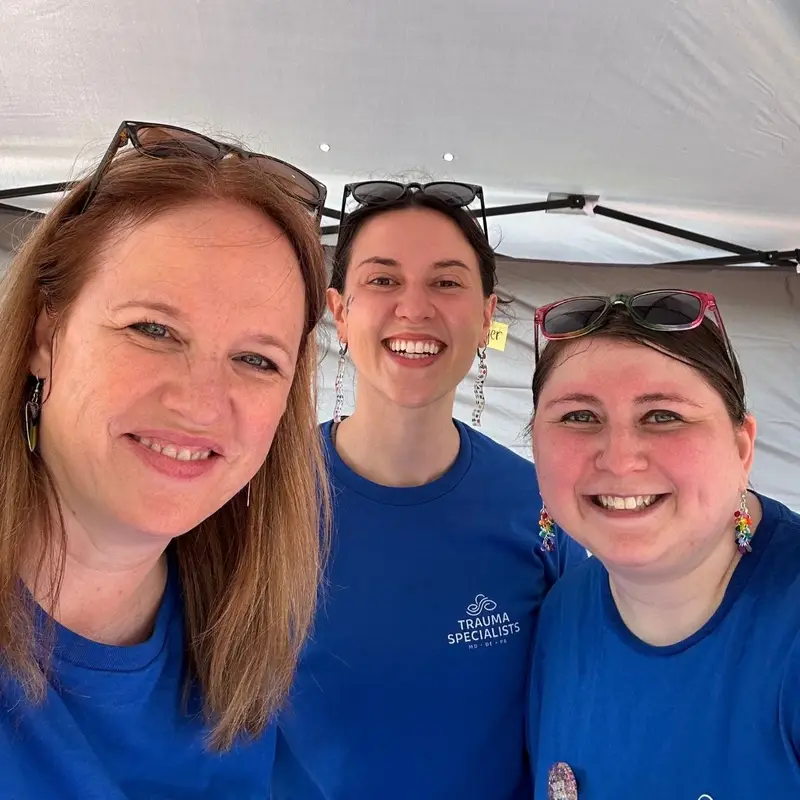
A community of trauma specialists
Training here is warm, human-centered, and relational. You acquire and hone the skills to treat trauma effectively alongside clinicians who do this work every day, in a community that extends across our sister practices in Maryland, Delaware, and Pennsylvania and keeps going after the training ends.

For practice owners and groups
Thinking About Your Whole Team?
Some practices put several clinicians through this training together, so the language of stabilization, pacing, and the window of tolerance becomes shared vocabulary across a team.
Katie Honeywell teaches the Body Awareness module and also handles partnership and group arrangements at TSTI. If a group might fit your practice, she would be glad to talk through group rates and what rolling it out looks like. One conversation, with the person who teaches the material.
Talk It Through with KatieContinuing Education Approvals

NBCC
Trauma Specialists Training Institute has been approved by NBCC as an Approved Continuing Education Provider, ACEP No. 7268. Programs that do not qualify for NBCC credit are clearly identified. Trauma Specialists Training Institute is solely responsible for all aspects of the programs. 12 Clock Hours.
NASW
This program is Approved by the National Association of Social Workers (Approval #886869661-6850) for 12 continuing education contact hours. Category: Social Work. Expires 9/30/27.
Trauma Specialists Training Institute, LLC maintains responsibility for all aspects of this program and its content.
Pricing & what's included
Register
The fall cohort meets Tuesday mornings, October 20 through December 8. If it fits your schedule and your caseload, we would be glad to have you in the room.
October 20 - December 8, 2026
Live Virtual — Weekly 90-min sessions · Tuesdays 8:00-9:30 AM ET
$479
$409
Early bird until October 6, 2026
per person
Checkout opens on our secure member site.
2027 Cohorts
Eight Tuesday mornings, 8:00-9:30 AM ET, live virtual. Registration for each cohort opens later.
- February 2 - March 23, 2027Coming Soon
- September 28 - November 16, 2027Coming Soon
What's Included
Reschedule and refund details on our TSTI Policies page.
If eight weeks isn't the right next step
A Free Place to Start
If you'd like a feel for how we think about session structure before committing to a full training, we wrote a field guide on structuring a trauma-informed session. It's free, it stands on its own, and it asks nothing of you. Take what's useful and leave the rest.
Read the Field GuideInclusion & policies
Who This Training Is For, and How We Run It
We strive to honor the intersectionality of all our trainers and participants and include this lens in our training content and discussion. We actively welcome all races, religions, genders, sexual orientations, and abilities. Our trainers and facilitators are here to help you each step of the way.
Trauma Specialists Training Institute welcomes any clinician who is looking to offer the best trauma treatment you can to your clients. Our training environment is geared toward inclusivity and we welcome all ages, abilities, cultures, ethnicities, races, genders, sexual orientations, and religions.
Cancellation Policy: If you need to cancel your training, any funds paid may be applied toward a future Trauma Specialists Training Institute program within one year of your original registration date. Please note that training registration fees are non-refundable, including any rescheduling fees.
We want to provide equal access to our training. If you are in need of any kind of accommodation to attend this training, please reach out to us so we can work with you to set up any accommodations needed. Contact info@traumaspecialiststraining.com.
Confidentiality Statement: All participant identifying information will be kept confidential upon registration of this training. Each participant can choose what name and identifying information to present on their Zoom screen.
Trauma Specialists Training Institute, LLC maintains responsibility for all aspects of this program and its content.
There is no known commercial support for this program.
124 North Court Street, Frederick, MD 21701
877-780-8784 | Email: info@traumaspecialiststraining.com | www.traumaspecialiststraining.com
Frequently Asked Questions
The Cohort Starts October 20
Eight Tuesday mornings on the work that makes trauma treatment possible. If this training meets you where your practice is right now, we would be glad to have you in the room.
Not sure if it's the right fit? Email info@traumaspecialiststraining.com and a real person will be glad to talk it through with you.