Be the One Who Does It
Episode summary
With tech platforms, consolidation, federal funding pressure, and AI reshaping mental health care, Rachel argues that clinicians who stay quiet leave the gap to others, and that advocacy at any level counts.
6 key takeaways
- Rachel sorts clinician advocacy into four overlapping levels: legislative, organizational, community, and your own public voice.
- Parity law already bars insurers from treating mental health differently from physical health, yet a Mental Health Parity Index finding Rachel cites puts reimbursement for physicians providing mental health care about 27% below physicians providing physical health care.
- Parity enforcement is inconsistent and depends on who pushes it; in Georgia, the insurance commissioner acting on his own levied over $20 million in fines against insurers for parity violations.
- Inseparable's workforce report, covering all 50 states and D.C., found only four states met more than half of their population's demand for mental health services, and nearly half of states meet 25% or less.
- Low reimbursement keeps many providers from taking insurance, which widens the access gap that new companies are entering the field to fill.
- State legislators are often more reachable than federal ones, and a clinician does not need a polished policy argument to contact one: describing what their caseload looks like and what reimbursement gaps prevent is testimony policymakers do not otherwise have.
Key moments
-
Rachel Harrison
"Clinicians have all kinds of expertise and credibility that money alone can't produce."
Clinicians often assume advocacy belongs to groups with lobbying budgets. Rachel names what a practicing clinician brings that no budget can buy.
Watch this moment -
Rachel Harrison
"And there are a lot of people starting to band together and do these things because if the people providing the care stay quiet, then no one is really there to fill that gap."
The argument of the episode in one sentence: if the people who see the work up close say nothing, the decisions get made without them.
Watch this moment -
Rachel Harrison
"When you can say, here's what my caseload looks like, here's what I'm seeing, here's what I can't do because of reimbursement gaps, that testimony is powerful."
It turns advocacy into something a clinician already knows how to do: describe what they see. Policymakers rarely hear that account firsthand.
Watch this moment -
Rachel Harrison
"You don't need to have a polished policy argument. You just need to tell your story."
Most clinicians hold back from contacting a legislator because they think they need to be policy experts first. Rachel lowers that bar to something any clinician can meet.
Watch this moment -
Rachel Harrison
"That's just one commissioner in one state that is not a system. This is an individual using his position to fight for what the law already requires."
Parity is already law. Georgia's fines show enforcement currently depends on individual officials choosing to act, which is exactly why pressure from clinicians matters.
Watch this moment -
Rachel Harrison
"And number five, be the one who does it, the person who is going to fight for independent mental health providers for fair reimbursement and for thoughtful AI regulation in a system that's designed around what patients and clients need."
The episode's title line. After a list of small steps, Rachel names the role itself: someone in the field choosing to speak for independent providers and the clients they serve.
Watch this moment -
Rachel Harrison
"And the takeaway from all of those conversations is that change is not happening in spite of individual effort. It was happening because of it. So being one person, one organization, or one conversation really does matter."
After a year of interviews with attorneys, delegates, advocacy groups, and coalitions, Rachel's read is that the change she saw came from specific people deciding to act.
Watch this moment
This week Rachel steps away from the interview format to do something she has been wanting to do for a while — take stock of everything the podcast has surfaced over the last year and pull it into a single, honest conversation about what is actually happening in mental health right now, and what clinicians and practice owners can do about it.
The landscape has shifted dramatically. Federal funding for mental health programs is being cut. SAMHSA has faced consolidation proposals. The 988 crisis line has seen reduced funding. School mental health grants have been halted. Insurance companies are finding loopholes in parity law, and federal agencies have signaled they will not enforce the rules designed to close them. AI is moving faster than regulation. And in the middle of all of it, clinicians who went to school to do therapy are trying to keep their practices afloat while the rules of the game change around them.
Rachel draws on conversations from across the podcast's history — with health policy attorneys, state delegates, insurance experts, advocacy leaders, and community organizers — to map out what is driving these changes and what the real levers for change actually are. The episode closes with five concrete action steps that any clinician can take this week, whether they have an hour or five minutes, to be part of shaping what the mental health system becomes next.
As Sue Abderholden, retired Executive Director of NAMI Minnesota, put it in Episode 23: the mental health system isn't broken. It's still being built. This episode is about showing up to build it.
Episodes Referenced:
- Ep 2 — Real Change: https://pod.link/1724750091/episode/YjMzODkxYmEtYWZkMi00MWJiLTkxMzgtMWMxYTlmZjJkY2Ri
- Ep 4 — When AI Meets Therapy: Risks, Ethics, and Advocacy with Dr. Ajita Robinson: https://pod.link/1724750091/episode/ZjljYzJlOTEtZDIxZS00NjRhLTkyNzMtOWJhZGVjMTk4Nzcw
- Ep 7 — Policy Shifts Reshaping Mental Health Care with Cathy Gilbert: https://pod.link/1724750091/episode/ODYxOTRhMjYtNTg4NS00YjNiLTk3ZTQtYWJlZjZhMDY1Zjcy
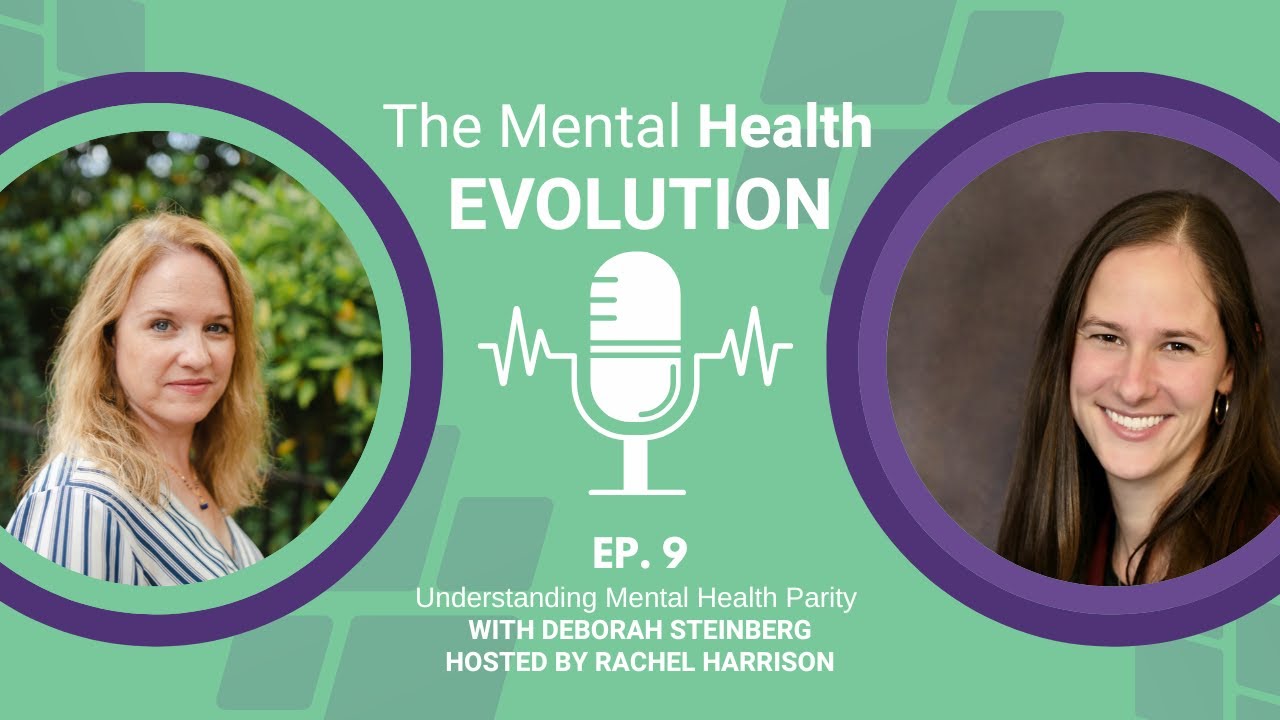
- Ep 9 — Understanding Mental Health Parity with Deborah Steinberg: https://pod.link/1724750091/episode/OWQ5YmYzMzMtZmQ5ZS00ZjUyLWFkMDEtZmFiZDdlNmVmNzZh
- Ep 23 — Building a Mental Health System That Works with Sue Abderholden: https://pod.link/1724750091/episode/OGE2YWJmM2ItY2JkZS00ZTE3LTliZTUtMWI1NDBiMTg0ZjZl
- Ep 28 — Community Health, Local Solutions with Malcolm Furgol: https://pod.link/1724750091/episode/NzM4ZWNkN2UtZjI1Zi00ZWQ0LTliYTQtZDI0Nzc0ODc2MmZj
- Ep 40 — When States Step Up for Safety with Delegate Lily Qi: https://pod.link/1724750091/episode/ZGNiYjdiM2MtODY5Yy00YTQzLTlhOTUtNGMzYjE4ZTM1ZmZj
- Ep 41 — The Coverage Gap Is a Policy Problem with Cara Cheevers: https://pod.link/1724750091/episode/ZDk5N2RmZmYtNDYyYi00ZmVlLTkwYzYtNmIwOWYyZGZkNTc5
Resources Mentioned:
- Inseparable Workforce Report: https://www.inseparable.us
- Kennedy Forum Mental Health Parity Index: https://www.thekennedyforum.org
- Mental Health Insurance Reform Task Force: https://insurancereformtaskforce.org
Connect with The Mental Health Evolution:
- Website: https://www.traumaspecialiststraining.com/mental-health-evolution-podcast
- Instagram: /thementalhealthevolution/
- LinkedIn: /the-mental-health-evolution
- Facebook: /TheMentalHealthEvolution
Music by Zach Harrison
Read the transcript
Automatically transcribed, so there may be small errors.
Read the transcript
Automatically transcribed, so there may be small errors.
-
0:05 Speaker A
welcome to Mental Health Evolution, a podcast about what's changing in mental health and why it matters. I'm your host, Rachel Harrison, inviting you into honest conversations with people from all perspectives in the field. Clinicians, tech founders, investors, insurance companies, and all the folks in between. Let's explore what's working, what's not, and what's next.
-
0:31 Rachel Harrison
Welcome back everyone to the Mental Health Evolution Podcast. Today we are going to do a solo episode and I'm excited to dig in and talk to you a little bit more about some of our conversations with all the perspectives in the field, clinicians, tech founders, investors, insurance companies, and all the folks in between. So let's take a look at what is working, what is not, and what is next. So I want to talk today about what's been on my mind lately and I don't think I'm alone in this is how much has changed in a very short period of time, not just in mental health, but for small businesses generally. The economy is shifting, AI is changing what's possible and what's expected. I'm hearing podcasts about all kinds of wild things like how does this impact our workforce? We won't have all these jobs. There's a lot of talk about how all this is impacting us and large companies moving into spaces that used to belong to local independent operators. And I think a lot of businesses in general are sort of figuring out the landscape while we are trying to do the day to day tasks and figuring out how to stay relevant, how to make decisions that make our organizations be able to stay afloat and to stay doing what we're doing. I'm seeing lots of different posts on Facebook of people that are saying things like, hey, referrals aren't happening in the way that they used to. And I don't know what's happening in my business, but things have gotten tougher. I think there's just a lot of factors at play here and mental health is no different. So I think it can be tough. I think this episode I want to focus a little bit on what serves the needs of clients, patients seeking mental health care best, like what is actually needed in this field. Because after talking to everyone on all sides of this over the last year in this podcast, I think everyone is trying to do something good. Everyone is trying to make things better for clinicians, for clients, for accessibility. And we are in a situation where a lot of new players are coming into the field, changing the model changing up what things look like. And that can be really overwhelming for people that have been doing this for a while. Specifically maybe group practice owners and solo clinicians trying to figure out what is happening here. Why are so many things changing? What is the impact of tech companies that are coming into the field? What do these organizations look like? What are they using to improve accessibility? How are clients getting care? Are they going directly to an insurance owned clinic or are they going to somebody that's been operating independently? And I think there's just a lot of questions there. But I want to talk a little bit today about what is happening for the people who are noticing the changes, but not necessarily coming in as the new people, the people who have been in this industry for a while and maybe they are looking for how they still have a role, what their place is in the changes. And I think there's a lot of things we can talk about today. And I'm kind of focusing in a little bit on advocacy and I just want to encourage organizations that might feel smaller, they might feel like they don't have the marketing budget to compete with large corporations, they don't have donations to political causes. But just focusing in on what does the practice have that is local, especially the ones that are in person and what are the differences? What is their role in this ecosystem of mental health in practice and industry? Even when things are changing dramatically, even when there's a lot of pressures, there's a lot of different things going on. So I want to kind of dive into a little bit about that, starting with this first section and I'm going to reference some of our previous episodes and kind of where I'm gathering some of this data. And that gives you a place that you can go back and listen in and dig in a little deeper if you're wanting to learn more about that as well. But first I want to talk about these forces at play, if you will. I keep referencing these changes, but what is actually changing? And back in episode two, which was one of our earliest episodes, we gathered a small group of local mental health leaders to talk through what was changing in our industry. It was about a year ago and we were looking at articles about tech driven platforms, about value based care models that insurance companies were using to evaluate and reimburse providers, about data privacy cases involving online mental health companies. And even then in those early conversations, the theme that keep kept coming up was that the rules of the game are changing and, and most clinicians don't know it yet, nor do clients. And what has changed since then is the pace. Kathy Gilbert, who joined us in episode seven as a consultant with a deep background in insurance and provider network operations, put it really well. When I asked her whether things were actually moving faster than usual, she said, and I'm going to kind of paraphrase here. When she wrote her master's thesis on national healthcare in the 90s, it took nearly 20 years for the ACA to get passed and now policy changes that could affect millions of people are moving in months time. She says it doesn't feel settled and she doesn't think that it is settled that the changes are continuing to roll out. We're definitely seeing that happening with the big beautiful bill that has proposed cuts to Medicaid, to the Affordable Care act, and to programs that fund mental health access for some of the most vulnerable populations. Samhsa, which is the Substance Abuse and Mental Health Services Administration, has faced consolidation proposals. School mental health grants have been halted. The 988 crisis line has seen reduced funding. And at the same time, on the provider side, there's still a reimbursement gap that has not closed. Deborah Steinberg, who joined us in episode nine, she's a senior health policy attorney at the Legal Action center in Washington D walked us through the Mental Health Parity and Addiction Equity act and what it was supposed to do. The law says that insurance companies cannot treat mental health differently than physical health. And yet the AMA Mental Health Parity Index found that physicians providing mental health care are reimbursed about 27% less than physicians providing physical health care. And that's after a parity law has been on the books for years. So there are lots of legal advocacy groups out there trying to look at this parity piece and apply it from the physical health care reimbursement rates to mental healthcare reimbursement rates. When you hear parity in general, that's what they're talking about and the enforcement of parity. Well, the insurance companies definitely found some loopholes. Federal agencies signaled they would not enforce some of the rules designed to close those loopholes. It took Georgia's insurance commissioner on his own to levy over 20 million in fines against the insurance companies for violating parity laws, he said, and I want to read this quote directly. Three years later. Our initial examinations show that insurers have turned a blind eye to the rules and continue to deprive Georgians of of the essential behavioral health resources they deserve. That's just one commissioner in one state that is not a system. This is an individual using his position to Fight for what the law already requires. And another force at play is absolutely AI. We had Dr. Ajetta Robinson on in episode four and she gave us a great overview of where state legislation is landing on AI and behavioral health. New York requiring chatbots to have protocols around suicidality. Nevada outlining AI providing direct service care. Illinois prohibiting AI from making therapeutic decisions. And we had Maryland state delegate Lily chee on episode 40 who talked about the bill she worked on right here in Maryland, House Bill 883, which would have regulated AI in behavioral health contexts. It didn't make it through the full session, but she was clear in the absence of federal leadership, states have to be the backstop. And if no one is pushing states to move, they won't. So that is the landscape giving you some of the conversations that we've had on this podcast. There's some tech disruption, corporate consolidation, insurance companies operating in ways that kind of evade parity laws, federal funding erosion, AI moving faster than regulation. And in the middle of that, clinicians who went to school to do therapy don't always think about tracking all these changes. They don't always think about the laws, they don't always think about advocacy. So in this next section today I want to talk about this advocacy response. And I think it's really challenging doing the day to day work of trying to provide therapy to people that really need it, to provide medication management to people that need it. It's really tough to make any space in that for watching the industry, watching what's happening. That's actually a big reason why this podcast exists. I want to give people who are providing care a way to understand what's happening in our industry without having to take all the time to do it. We curate information for you, we provide articles, we give you conversations that are a snapshot that hopefully help educate. And advocacy is the next step. It is the thing that we can do. And there are a lot of people starting to band together and do these things because if the people providing the care stay quiet, then no one is really there to fill that gap. What is needed, what is happening, what works, what doesn't work. Clinicians have all kinds of expertise and credibility that money alone can't produce. And I think for legislators and a lot of lawmakers in different places, there is a lot of interest in actually understanding the day to day work. I have found a lot of openness there, but I think it's hard for clinicians to find time and space to do that. Kara Cheevers, who joined us in episode 41 as the Vice president of Coverage Policy and Inseparable, which is a national mental health advocacy organization, she shared some data that I think captures this well. Their workforce report, which looked at all 50 states in D.C. found that only four states met more than half of their population's demand for mental health services, and nearly half of all states meet 25% or less. And that's one of the biggest reasons that there are new companies, that there's new innovation, that there are people trying to create access to care. And a reason as well that creates this access gap is that a lot of providers are not able to take insurance, and that is because of low reimbursement rates. It's kind of a vicious cycle here, but policies and advocacy can help change this. Cara also made the point that there are three areas where state policy can make a real difference, right? Building a workforce pipeline, supporting providers already in the field, and modernizing data and technology. Each of those is a lever that advocates can pull, that legislators can pull, and that mental health community shows up and asks for them. If the mental health community shows up and asks for that. Sue Abderholden is a retired executive director of NAMI Minnesota. And she was on our episode in episode 23 and said something that has stuck with me. When I asked her about the phrase the mental health system is broken, something I've said myself, she actually pushed back on that. She said, the mental health system isn't broken, it's still being built. And she meant that as a call to action. We have the opportunity to build something intentional, but it requires showing up. It requires using our voices and not stepping back. In this last section of the solo podcast today, I want to talk about what advocacy actually looks like, specific things that are happening and ways, even if you don't have a ton of time, that you might be able to dive in. I think there are some different levels of advocacy. They're not mutually exclusive. You can operate in more than one of these, certainly at the same time. The first level is legislative advocacy, and this is what most people think about. It's showing up to a committee hearing, it's writing. Your state representative is participating in your professional association's lobbying efforts. It feels more formal and sometimes a little intimidating, but it's more accessible than most clinicians think. Delegate Lily Chee gave us a great window into this in episode 40, and she talked about that House Bill 883 and how it came to her. Someone just brought the idea. Someone said, this is a problem. This is what needs to happen. She was on the right committee, the timing was right and she moved on it. It didn't make it through the session, but the door is not closed. State level legislators are often more accessible than federal ones. They do respond to constituent contact. They want to know what's happening in their districts. And as Delegate Chi pointed out, the absence of federal action on things like AI regulation in different states is where the work is actually happening. Deborah Steinberg in episode nine made a similar point about parity enforcement, saying that the law exists. The problem is that enforcement is inconsistent and it decides on who is going to push that forward. Advocacy in this space could look like supporting organizations that are doing parity monitoring like the Kennedy Forum's Mental Health Parity Index. Or it could look like contacting your state insurance commissioner directly when you see a violation. The Georgia example shows that when someone in power decides to use that power, things happen. The second level is organizational advocacy and this is working through your professional organizations, the American Counseling association, the American association for Marriage and Family Therapy, nasw, your state licensing board, advocacy arms. These organizations already exist to represent the profession and they are more effective when they have member engagement. If you're paying dues and not engaging, then there's some support of advocacy, certainly. But it might not take much to be involved in what's actually happening. Inseparable is another example, and they do research, track state level policy and translate it into action steps for advocates and lawmakers. These organizations that need visibility and support from the clinical community to do their work effectively. One of the things Kara said that I found really valuable was that clinicians have firsthand stories that advocates and policymakers don't have. When you can say, here's what my caseload looks like, here's what I'm seeing, here's what I can't do because of reimbursement gaps, that testimony is powerful. The third level is community level advocacy. And this is where episode two, the Real Change Initiative, was instructive. Starting a small grassroots local group together and getting some awareness in the community. That was called the Real Change Initiative. It wasn't a lobbying effort. It was a local community facing effort to raise awareness and keep building relationships. And the principle underneath it that clinicians organizing together around shared concerns, speaking publicly, educating communities, is advocacy. It shifts the narrative. It builds the kind of public understanding that eventually supports policy change. And Malcolm Fergal, who leads the Coalition for a Healthier Frederick county, talked about this in episode 28. His work is specifically about systems level change, bringing together health care, nonprofits, government and other sectors around equity and access. He is not a clinician, but his coalition includes mental health providers, and the work he does directly affects what happens to mental health care in our community. Connecting with organizations like that, health coalitions, community foundations, civic organizations, is a form of advocacy that doesn't require a trip to a local state government. The fourth level is your own public voice, and this is the one that feels most personal and maybe the most available. It's what you say publicly on social media, in your community, in conversations with potential clients, and the way that you talk about your work. The narrative around mental health care matters when clinicians are invisible, the public conversation about AI, about corporate consolidation and about what therapy actually is and why human being matters. About what therapy actually is and why it matters. That vacuum gets filled by someone else. To reference Ajeta Robinson again in episode four, she made a strong case for clinicians being visible advocates for their own field. She has a training program on AI for therapists, and she's vocal about ethics in that space. And she is someone who is speaking up and shaping how other clinicians think about these issues. And in the very last section today, I want to talk about what you can do this week, because a lot of this is abstract. Some of you are hearing about legislative things, even local things, and saying, I don't even know if I have space for that. And that's okay. But here are a couple of action steps if you do have a little bit of time. Number one, find out who your state representatives are and what committees they sit on. If they're health or behavioral health committees, introduce yourself. Send an email. Go to a town hall. Most legislators will meet with a constituent who makes the effort. You don't need to have a polished policy argument. You just need to tell your story. Number two, look into Inseparable's workforce report for your state. It scores all 50 states on how well they're meeting mental health workforce demand. If your state is failing, and there's a good chance it is, that's a good conversation starter. It's something that you can be talking to your community about or to a legislator or a hospital system system. Number three, if you're a member of a professional organization and you haven't engaged with their advocacy arm, maybe just look up what they're asking for. Can you sign on to letters? Can you show up to virtual advocacy days? They're doing the work and member engagement makes it more credible. Number four, talk about it. Talk publicly about why your work matters, about what practice means to you, your group practice, your local practice means to you and what gets lost when reimbursement is so low that you can't afford to take insurance? Consumers are part of this equation. They vote, they make choices, and they can also advocate. But they do need to understand the stakes first. And number five, be the one who does it, the person who is going to fight for independent mental health providers for fair reimbursement and for thoughtful AI regulation in a system that's designed around what patients and clients need. It takes all of us. So lastly, as we close out this episode, kind of summarizing some of the themes specifically around advocacy and about what people are doing. Who are the organizations that have been around for a long time, the group practices, the solo practitioners, looking around at all the changes and thinking what can be done. Advocacy is one way. We are, as Sue Abderholden put it, still building this system. What role do we want these practices to have? What role does a tech company have? What role does AI have? These are all things that are still really in process. And it means that there's voice, that there's room for development here. I started this podcast because I wanted to raise the conversation about what's happening in our field. I will continue to do that, and I've been grateful to have guests who are doing remarkable work, attorneys, delegates, advocacy organizations, community coalitions. And the takeaway from all of those conversations is that change is not happening in spite of individual effort. It was happening because of it. So being one person, one organization, or one conversation really does matter. I hope this episode gives you something to think about and maybe something to do. As always, everything we've referenced today will be in the show notes. And if this conversation resonated with you, I'd love to hear from you. Thanks for being here and we'll be back next week with more on how the mental health industry landscape is changing. Bye for now.